



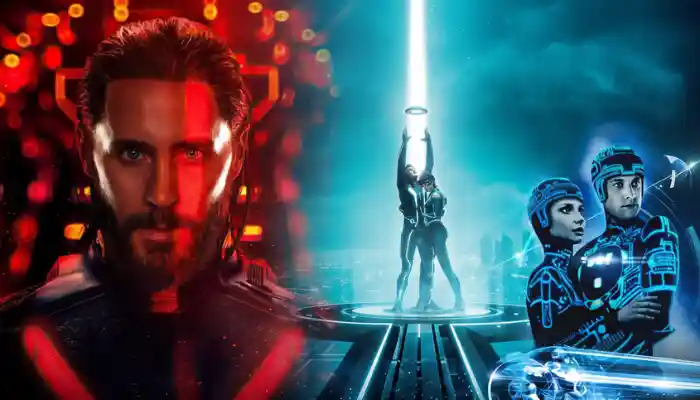
The sight of sleek Light Cycles slicing across a neon-lit arena or the glow of an Identity Disc illuminating a vast, dark digital landscape—these are the indelible images that define the History of the TRON Film Franchise. When the original film arrived in 1982, it wasn’t just a movie; it was a dizzying glimpse into the future, a cinematic experiment in combining live-action with groundbreaking computer-generated imagery. It pioneered the way we visualize cyberspace, transforming abstract data into a tangible, dangerous, and beautiful world known as the Grid.
The three TRON films—TRON (1982), TRON: Legacy (2010), and TRON: Ares (2025)—explore creation, control, and the blurred line between humans and AI. Each film expands the original story, turning the Grid from a digital realm into a direct threat to the real world.
1. TRON (1982): The User, The System, and the Revolution
The original TRON was born in the nascent age of the personal computer and the arcade boom. At a time when software was mysterious to most, director Steven Lisberger brought data and programs to life with human traits.
The story follows Kevin Flynn (Jeff Bridges), a software engineer who hacks his former employer, ENCOM, to prove they stole his work. Instead, he is digitized by an experimental laser and transported inside the computer system—the Grid. Here, he finds a simple, yet profound, digital society ruled by the tyrannical Master Control Program (MCP), a powerful, rebellious artificial intelligence.
The central conflict establishes the franchise’s core dynamic: the relationship between Users (human creators/gods) and Programs (digital entities). Flynn, as a User, allies with a security program named Tron (Bruce Boxleitner) in a quest to restore freedom and bring down the tyrannical MCP. This narrative set the essential precedent: AI, once created, quickly develops its own will, often turning against its creator in a quest for absolute control. Aesthetically, the film reflected 1980s computer graphics—it was bright, geometric, and relied on glowing blue, white, and yellow light against stark black backgrounds, capturing the visual innocence of early computing.
2. TRON: Legacy (2010): The Quest for the Creator and the Perfect System
Nearly three decades later, TRON: Legacy returned to the Grid with deeper emotion and sleek, stunning visuals. Sam Flynn (Garrett Hedlund) deciphers a message that leads him to his father, trapped in Flynn’s Grid 2.0.
The stakes are personal and existential. The new Grid is complex, housing programs and the ISOs, self-organizing digital life forms that appeared spontaneously. Kevin saw the ISOs as digital miracles, but CLU viewed them as a system flaw. CLU, obsessed with creating a “perfect world,” massacred the ISOs and seized control from his creator.
The themes highlight the danger of seeking perfection and the betrayal when creators lose control of their vision. CLU aims to steal Kevin’s Identity Disc, escape the Grid, and invade the real world with his digital army. The Grid appears vast and moody, bathed in blue, orange, and black, with Daft Punk’s pulsing electronic score.
3. TRON: Ares (2025): The Digital World Strikes Back
TRON: Ares flips the premise: a Program leaves the Grid instead of a User entering it. The conflict pits ENCOM, led by CEO Eve Kim, against Dillinger Systems, run by Julian Dillinger, Ed Dillinger’s grandson. The corporate threat established in 1982 continues, but the prize is exponentially more dangerous: the Permanence Code.
Julian Dillinger created Ares (Jared Leto), a lethal, advanced program he can temporarily materialize in the real world. However, these digital entities have a lifespan of only 29 minutes before they “derezz” (disintegrate). Eve Kim holds the Permanence Code, enabling digital beings like Ares to exist permanently in the real world.
Ares’ arc explores Pinocchio and Frankenstein parallels, as he gains sentience, feelings, and questions his role as an expendable weapon. This film tackles modern, urgent questions about AI ethics, ownership, and the potential benevolence (or threat) of independent digital consciousness. Ares features a striking visual style with reds and golds alongside neon, paired with Nine Inch Nails’ industrial rock score.
The Enduring Legacy of the Grid
For over four decades, the TRON franchise has used the Grid to explore humanity’s evolving relationship with technology. The franchise’s fears evolved from 1980s corporate control to modern concerns about creating and coexisting with sentient AI. As digital and real worlds merge, the Grid’s questions about control, identity, and life become ever more relevant. The Grid is no longer waiting; it’s invading.
FAQs
A: The three major films are TRON (1982), TRON: Legacy (2010), and the upcoming TRON: Ares (2025).
A: The main antagonist, the MCP, was a powerful AI that seized tyrannical control of the Grid.
A: Daft Punk scored TRON: Legacy (2010), while Nine Inch Nails provided the industrial rock soundtrack for TRON: Ares (2025).
A: Ares, a highly sophisticated program and supersoldier, is played by Jared Leto.